Video
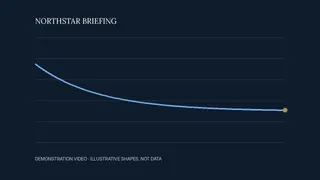
Video: how a yield curve is drawn, and what its shape is meant to show
A short visual explainer on plotting borrowing costs across maturities.

Demonstration profile. Marcus Lindqvist writes about bonds, currencies and how investors price risk.
A short visual explainer on plotting borrowing costs across maturities.
There is no bankruptcy court for nations. Debt crises are instead resolved through slow, often painful negotiations shaped by contract terms, creditor diversity and the threat of lost market access.
The gap between short- and long-term interest rates is one of the most watched signals in finance. It is also one of the most misunderstood.
Interest that earns interest is the most powerful force in personal finance. It rewards patience on one side of the balance sheet and punishes delay on the other.
A weekly guide to how markets work, one concept at a time. This is a demonstration episode.
For most buyers, the price of a home is really the price of a loan. That link explains why property markets react sharply when borrowing costs change.
Exchange rates reflect interest rates, trade and confidence. A rising currency helps some parts of an economy and hurts others.
One concept, fifteen minutes. This is a demonstration episode.
Tapping a card or sending money abroad feels instantaneous. Behind it sits a layered architecture of messages, ledgers and central bank accounts that determines when a payment is truly final.
Oil, metals and grains trade in markets where small imbalances can produce large price swings. Understanding why requires looking at inventories, futures curves and the currency in which they are priced.
Every country must choose how its currency relates to others. The choice is a trade-off between stability, monetary independence and openness to capital — and no country can have all three.
When teams buy and sell the contracts of athletes, they are trading scarce talent under unusual rules. The result is a market prone to bidding wars and sharp swings in value.
A charge that looks trivial in a single year compounds alongside returns. Understanding how fees work is one of the simplest ways for savers to keep more of what they earn.
Profits are an accounting opinion; cash is a fact. The cash-flow statement shows where money really came from and where it went.